

Why Outsourcing is a Vital Business Skill: Lessons Students Can Learn from Academic Delegation
In the hyper-competitive landscape of 2026, the definition of a “self-made” success story has shifted. Whether you are a Fortune 500 CEO or a college sophomore at a top-tier US university, the ability to manage time is no longer about working harder—it’s about working smarter. At the heart of this evolution is outsourcing, a strategic business pillar that is increasingly mirroring the academic choices made by modern students.
The global outsourcing services market is projected to reach $1.09 trillion by the end of 2025, according to recent industry data from Mordor Intelligence. In the United States alone, the Business Process Outsourcing (BPO) sector is expected to grow at a compound annual growth rate (CAGR) of 9.9% through 2030. This isn’t just a corporate trend; it is a fundamental shift in how high-achievers approach specialized tasks to maintain a competitive edge.
The Executive Skill: Understanding Opportunity Cost
For a business leader, every hour spent on administrative data entry is an hour lost on strategic innovation. This is known as Opportunity Cost. In a corporate setting, a manager might hire a specialized agency to handle technical SEO or payroll logistics. By doing so, they aren’t “dodging” work; they are optimizing their ROI.
Students face a parallel dilemma. When a student decides to make my assignment by collaborating with professional academic services, they are practicing the very delegation skills required in the C-suite. By offloading time-intensive research or formatting tasks to specialists, students can focus on mastering core concepts, networking for internships, or maintaining their mental well-being.
Data-Driven Reality: The Burden of Modern Workloads
The pressure to “do it all” has reached a breaking point. Statistics from the 2024-2025 Healthy Minds Study reveal that while severe depression rates among students have seen a slight decline, over 35% of US students still report significant academic burnout. Similarly, in the business world, 87% of organizations now include external contractors as a permanent part of their workforce to mitigate employee exhaustion and scale operations.
The lesson for the next generation of leaders is clear: total self-reliance is a bottleneck. Just as a small business owner might outsource marketing to focus on product development, a student may choose to do my homework with expert assistance to ensure they don’t sacrifice their cumulative GPA for a single, overwhelming deadline. This isn’t just about survival; it’s about strategic resource allocation.
Key Statistic: 66% of US businesses now outsource at least one department, while 37% of small businesses use external partners for specialized IT or design tasks (Source: Enterprise Apps Today, 2024).
Academic Delegation as a “Soft Skill” Laboratory
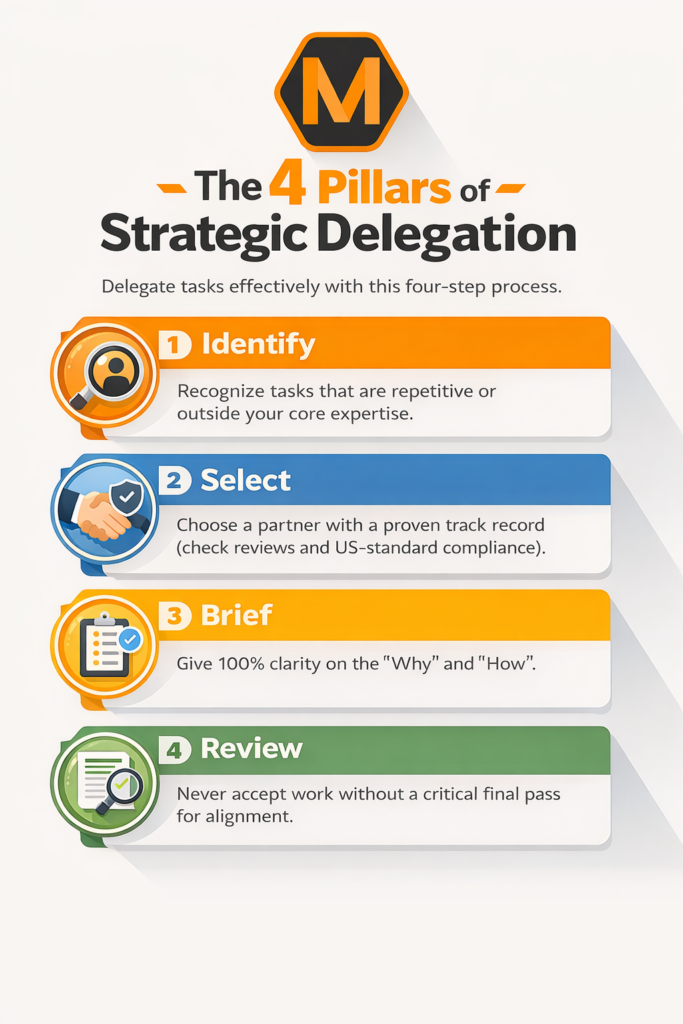
Many educators are beginning to view delegation not as a shortcut, but as a sophisticated soft skill. Effective delegation—whether in an office or a dorm room—requires three specific competencies:
- Vetting Expertise: Identifying the right partner who understands the specific requirements of the task.
- Clear Communication: Providing detailed instructions to ensure the final output aligns with the desired vision.
- Quality Control: Reviewing the work to ensure it meets high standards before final submission.
See also: Why Outsourcing is a Vital Business Skill: Lessons Students Can Learn from Academic Delegation
Comparative Table: Outsourcing vs. Academic Delegation
| Feature | Business Outsourcing | Academic Delegation |
| Primary Goal | Scalability & Efficiency | Time Management & GPA Protection |
| Resource | Specialized Agencies/Freelancers | Academic Writing Services/Tutors |
| Economic Logic | Cost-Saving on In-House Labor | Maximizing Study Time for Core Subjects |
| Risk Management | Service Level Agreements (SLAs) | Plagiarism Checks & Quality Reviews |
The 4 Pillars of Strategic Delegation
Summary: Preparing for a Managed Future
The transition from a student to a business leader is paved with decisions on where to spend energy. By embracing the principles of outsourcing early on, students develop a “managerial mindset” that values results over raw labor hours. In the 2026 economy, the top 3% of earners won’t be the ones doing everything themselves—they will be the ones who know exactly how to delegate.
FAQs
1. Is academic delegation the same as outsourcing in business?
Yes, conceptually. Both involve transferring specific tasks to external experts to improve efficiency and focus on high-priority goals.
2. Does outsourcing reduce the quality of work?
On the contrary, when done correctly, outsourcing improves quality by leveraging specialized talent that possesses deeper expertise than a generalist.
3. Why is the US outsourcing market growing so fast?
The 9.9% CAGR is driven by the need for digital transformation, AI integration, and the rising cost of full-time in-house US labor.
References
Boston University SPH (2025). “2024-2025 Healthy Minds Study: Student Mental Health Trends.”
Grand View Research (2024). “US Outsourcing Services Market Size & Outlook 2025-2030.”
Mordor Intelligence (2025). “Global Outsourcing Services – Industry Trends & Growth Forecasts.”
Deloitte Global (2024). “Global Outsourcing Survey: The Workforce Evolution.”
Author Bio
Elena Sterling Senior Content Strategist at MyAssignmentHelp With over a decade of experience in educational consulting and business strategy, Elena specializes in helping students and young professionals bridge the gap between academic theory and real-world corporate skills. A thought leader in the “smart labor” economy, she is passionate about teaching the next generation how to master time management and strategic delegation to thrive in the modern US workforce.